
The 2026 Blueprint for AI Agents in Google Cloud
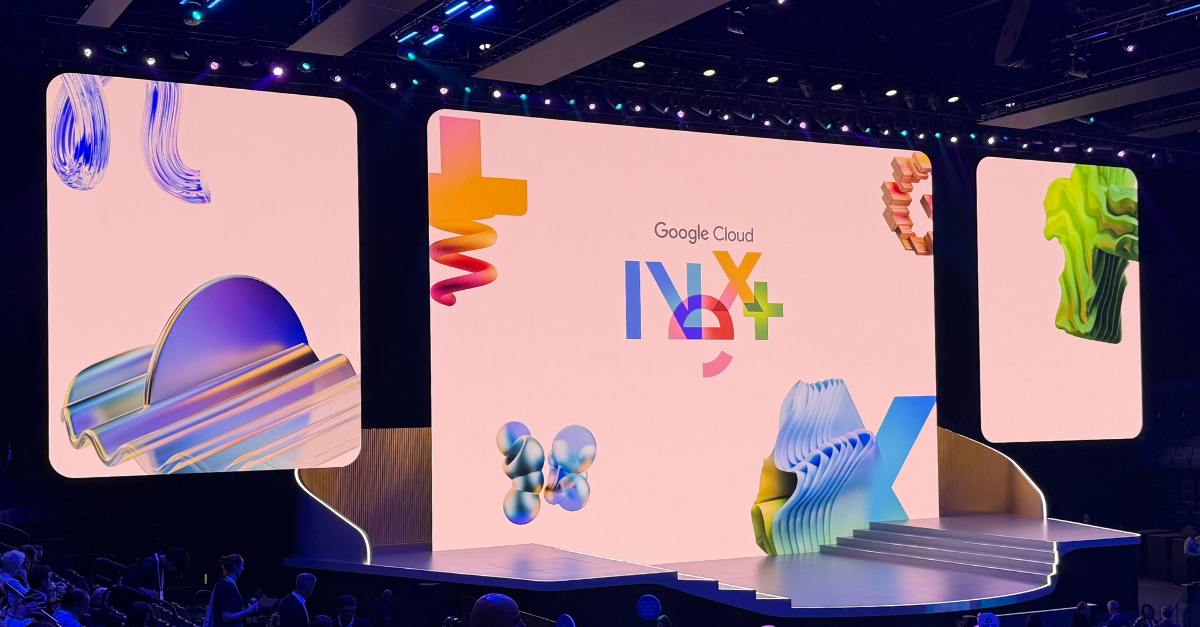
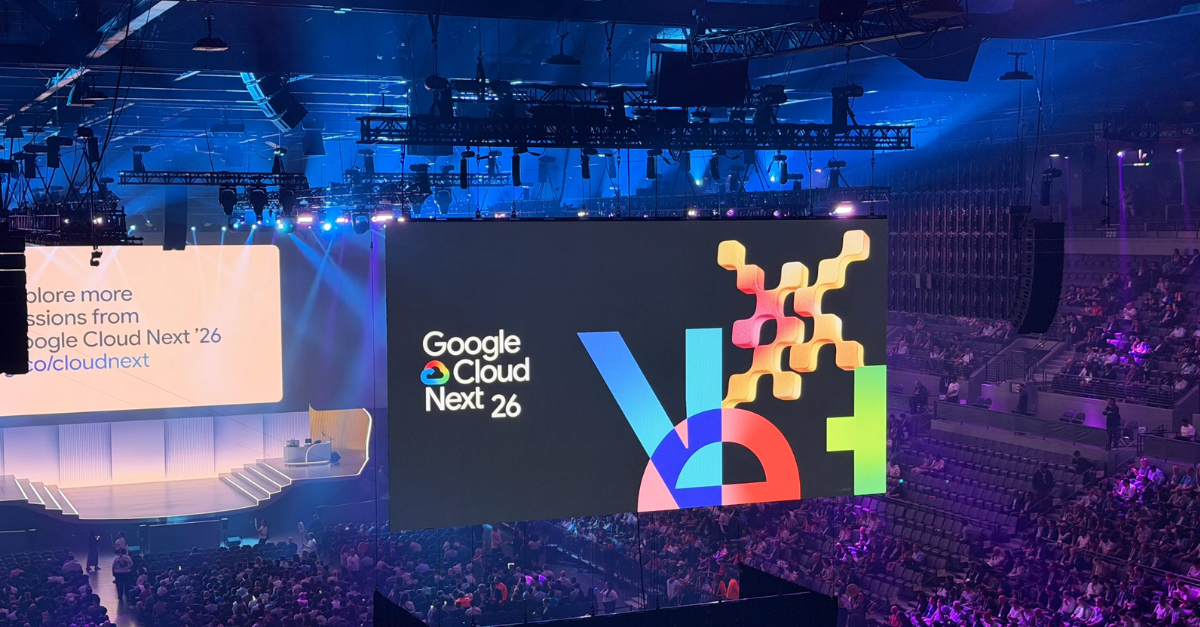
Google Cloud Next 2026, which took place on April 22–24 at the Mandalay Bay Convention Center in Las Vegas, confirmed that we have officially entered the "Agentic Era". The happtiq team was there as Google unveiled how autonomous technology has become the standard for enterprise operations.
The industry has moved past early experiments with prompt engineering and RAG workflows. Today, senior architects and IT leaders now face a different set of challenges: deploying production-grade, autonomous agent fleets and reducing technical friction. Google Cloud is addressing this by building what is essentially an operating system for the agentic enterprise.
Control: Gemini Enterprise Agent Platform
The event’s biggest announcement was the launch of the Gemini Enterprise Agent Platform, the formal evolution of Vertex AI into a full lifecycle management system for agents. It provides a unified environment to build, scale, and govern agents that proactively meet objectives.
For technical teams, this means moving from managing individual models to managing "agentic loops." The platform is structured around four strategic pillars:
Build: Developers can prototype with the low-code Agent Studio or use the upgraded Agent Development Kit (ADK) for code-first, graph-based logic.
Scale: The Agent Runtime now supports long-running agents that maintain state for days, backed by a Memory Bank that replaces temporary sessions with persistent context.
Govern: Control is centralized through Agent Identity, assigning each agent a unique cryptographic ID and an Agent Gateway to enforce security policies.
Optimize: Teams can use Agent Simulation and Evaluation tools to trace reasoning and score agents against live traffic.
Infra: Silicon for the Agentic Era
Scaling millions of agents requires massive compute power, as they consume up to 50x more tokens than standard chatbots. Google introduced 8th-gen TPUs with a split-chip architecture to meet this demand:
TPU 8t (Training): Features a Collectives Acceleration Engine (CAE) to reduce on-chip latency and speed up model development.
TPU 8i (Inference): It pairs 288 GB of high-bandwidth memory with 384 MB of on-chip SRAM to keep a model’s active working set entirely on-chip. This delivers 80% better performance-per-dollar than the previous generation.
These are connected by the Virgo Network, a fabric linking over a million TPUs into a single supercomputer.
Data: The Agentic Data Cloud
AI agents depend on context, but legacy systems often struggle to provide it in real-time. The Agentic Data Cloud bridges this gap.
Knowledge Catalog: Uses Gemini to automatically map business context across silos without manual tagging. When used with BigQuery, it ensures agents and humans use the same logic.
Cross-Cloud Lakehouse: Uses Apache Iceberg to give agents zero-copy access to data on AWS or Azure. This keeps governance centralized and avoids expensive data migrations.
Security: Agentic Defense
As agents move from "talking" to "doing," security is a priority. To counter lightning-fast attacks Google launched Agentic Defense, a powerhouse combo of Google’s Threat Intelligence and Wiz. Now, Google SecOps features three specialized agents:
Threat Hunting Agent: Proactively searches for novel attack patterns that bypass traditional signature-based defenses.
Detection Engineering Agent: Automatically identifies coverage gaps and generates detections for new threat scenarios.
Wiz AI-Application Protection: Provides an AI-Bill of Materials (AI-BOM) to automatically inventory every AI framework, model, and IDE extension across your environment, uncovering "shadow AI".
Productivity: The Agentic Taskforce in Workspace
In Google Workspace, the Agentic Taskforce allows the broader workforce to use these tools. "Skills in Workspace" lets companies automate standard operating procedures, such as invoice reviews. Google also introduced A2UI (Agent-to-User Interface), an open-source standard using declarative JSON to let agents generate secure, brand-consistent user interfaces.
Development and Deployment
For those building these systems, the development experience is changing:
Antigravity Editor: A Gemini-powered IDE connected via MCP to your entire cloud environment, allowing developers to generate apps and modify UIs by pointing and clicking.
Agents CLI: A specialized tool (run via uvx google-agents-cli) that handles the entire scaffolding, evaluation, and deployment cycle.
Cloud Run Agent Sandboxes: Isolated environments that spin up in milliseconds, allowing agents to safely execute model-generated code without risk to the host system.
Conclusion
The announcements from Google Cloud Next 2026 signal the end of the experimental phase of generative AI. We have entered the era of systems of execution. By providing the unified "connective tissue" of the Gemini Enterprise Agent Platform, specialized TPU v8 silicon, and the Agentic Data Cloud, Google has moved the conversation from "Can we build an agent?" to "How do we manage thousands of them?".
For organizations looking to lead in this new landscape, the priority is clear: standardize your agent governance, unify your data context, and secure your autonomous workflows.
If you are interested in learning more about one of these announcements or would like to implement them in your organization, make sure to contact us! We are your reliable Google Cloud Premier Partner.